
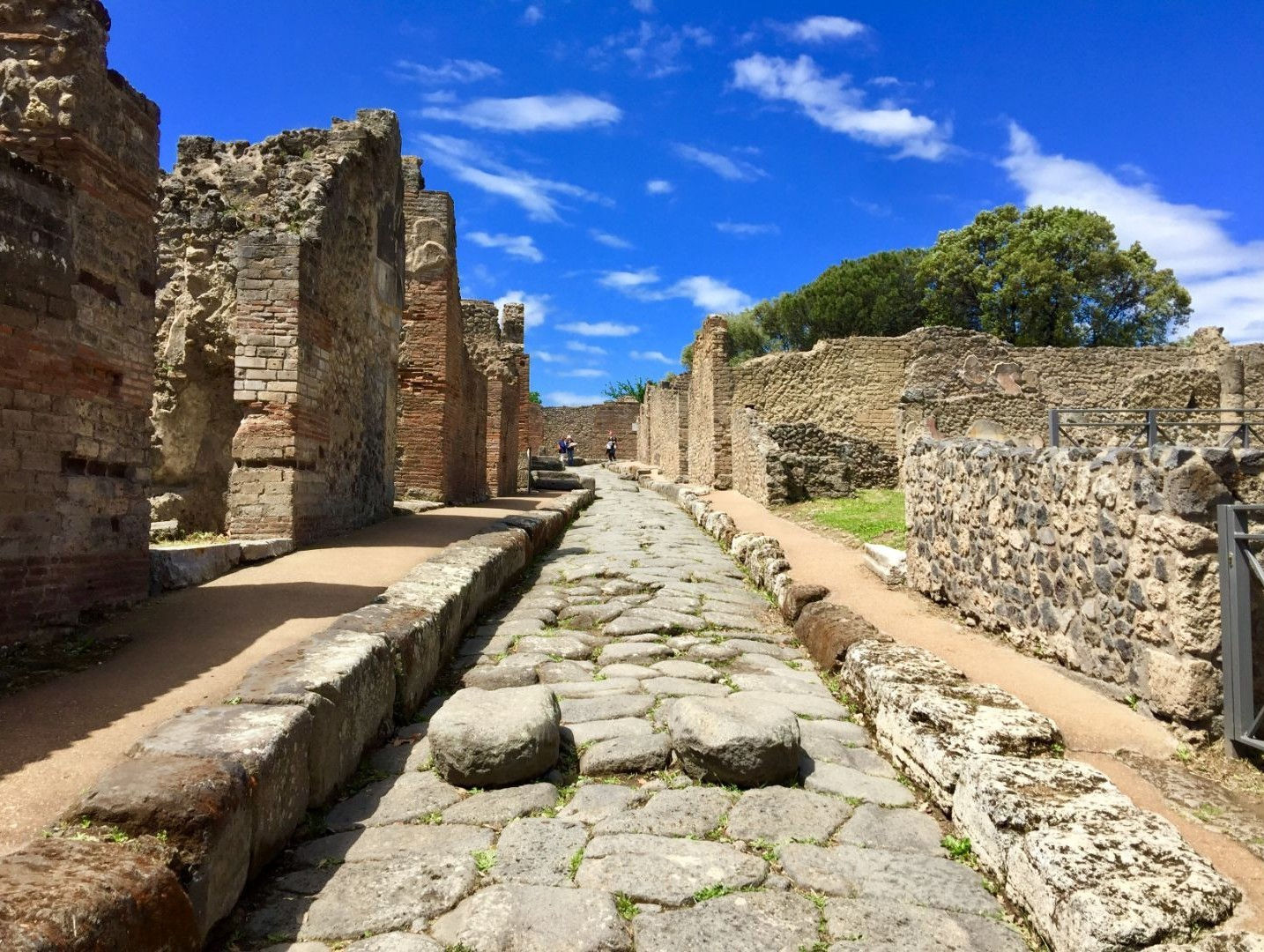

Discover the magic and drama of Pompeii, the Roman city suspended in time after the eruption of Vesuvius in 79 AD.

 With VoxTour, in collaboration with Amuseapp, you will walk among the perfectly preserved streets, frescoed houses and temples that tell the story of daily life over two thousand years ago.

 An immersive and self-guided experience, with two tailor-made itineraries.
 From the thermal baths to the spectacular Imperial Villa, this tour takes you step by step through the best-preserved ancient city in the world.

 The audio guide allows you to enjoy the experience completely independently, enriched with interesting facts, insights, and multimedia content. Chat with our chatbot to make your visit unique and engaging.

 Not only will you be able to use the audio guide along the route, but also from the comfort of your home!
 Discover the wonders you'll discover with this audio guide from the comfort of your own home!
Pompeii Archaeological Park: An Open-Air Museum - Audio-Guided Tour
– Entrance from Porta Marina
The ancient main gate of the city, the access point to the public and religious quarters of Pompeii.– Suburban Baths
An extremely elegant thermal complex, where mosaics and frescoes reveal the luxury of Pompeian daily life.– Antiquarium
The museum that tells the story of Pompeii through artifacts, statues, and objects found during the excavations.– Sanctuary of Apollo
One of the oldest temples in the city, a symbol of the Greek cults that merged with the Roman religion.– Granaries of the Forum
A place where food supplies were stored and today home to many of the casts of the eruption's victims.– Temple of Jupiter
Religious and political heart of Pompeii, dedicated to the supreme deity of the Roman pantheon.– Forum Baths
Frequented every day by citizens and travellers, they were a place of relaxation and social gathering.– House of the Tragic Poet
Famous for the “Cave Canem” mosaic, it is one of the most famous houses in the ancient city.– House of the Small Fountain
An example of private elegance, with a fountain decorated with mosaics and precious shells.– House of the Faun
One of the largest and most sumptuous residences in Pompeii, with the remains of the famous Alexander mosaic.– Macellum
The covered market where meat, fish and fresh produce were purchased: a vital centre of the city's economy.– Sanctuary of the Public Lares
A sacred space dedicated to the protective spirits of the city, symbol– Temple of the Genius Augusti
Imperial place of worship dedicated to the emperor Augustus, deified after his death.– Eumachia Building
A large public complex linked to the textile trade,– Municipal Buildings
The offices where the city was administered: here the laws and the civil life of the citizens were decided.– Championnet House
A refined residence with splendid frescoes and harmonious courtyards, an example of Pompeian domestic art.– House of Geometric Mosaics
Famous for its decorated floors, it bears witness to the taste and wealth of the local aristocracy.– Basilica
The center of justice and public affairs: a majestic hall that anticipates the forms of Christian architecture.– Sanctuary of Venus
Dedicated to the city's patron goddess, it stands on a panoramic terrace overlooking the sea.– Imperial Villa and Exit from Piazza Esedra
An elegant residential complex rich in frescoes, which marks the end of the visit and the return to the present.
